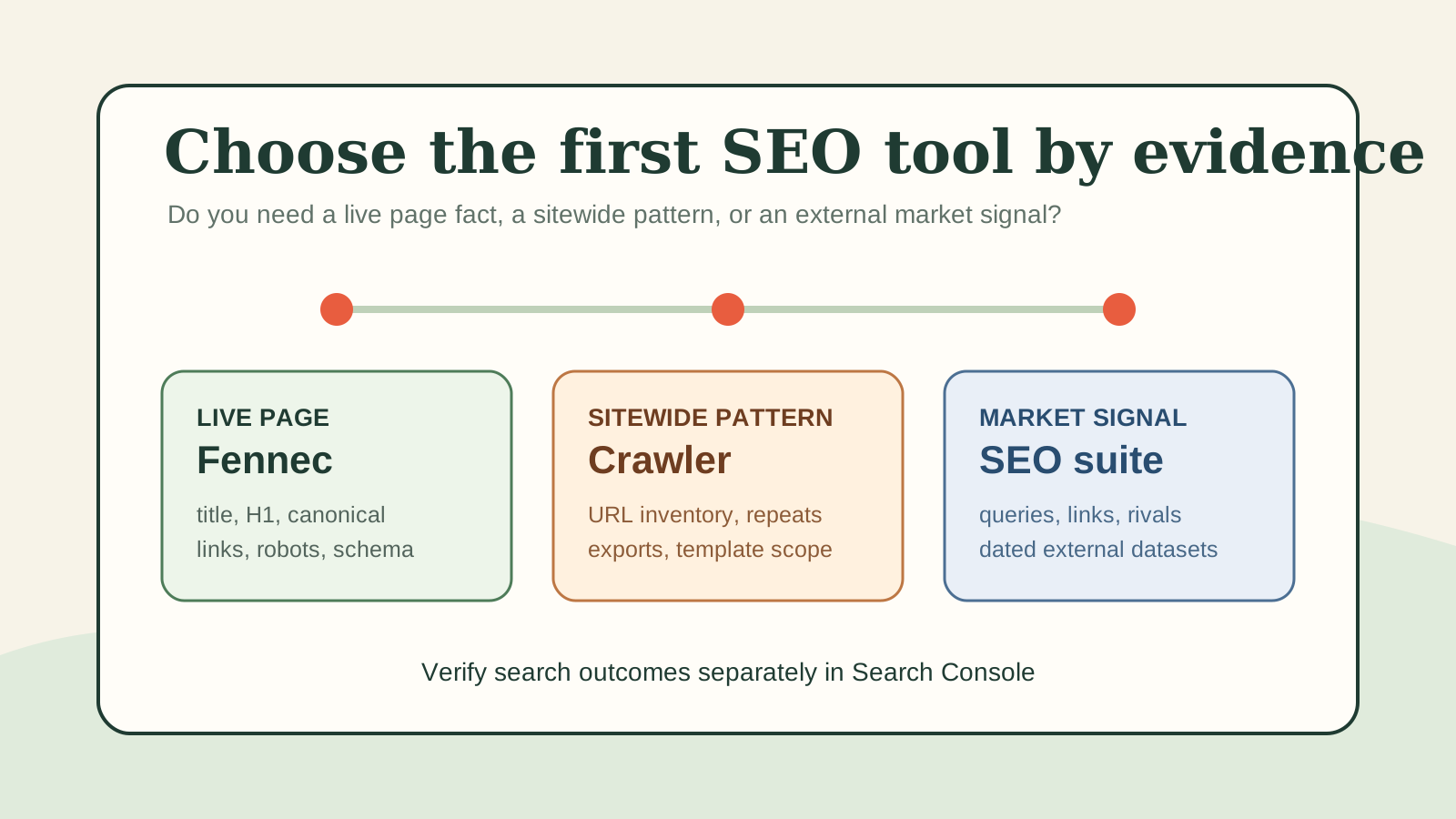
Fennec SEO vs traditional tools: choose the first tool by the evidence you need
If you are choosing between Fennec SEO, a crawler, and a large SEO suite, start with one question: what evidence do you need before the next decision?
Direct Answer
Use Fennec SEO first when you need to see what one live URL currently exposes: page title, headings, links, images, canonical, robots and sitemap signals, or structured data. Use a crawler first when you need a repeatable inventory across many URLs. Use an SEO suite first when the decision depends on external search demand, competitors, backlinks, or rank tracking.
The useful comparison is not “which tool wins?” It is “which tool gives me the missing evidence with the least detour?” A page audit, a crawl export, and a market dataset answer different questions.
Start With The Decision, Not The Tool
| If you need to decide… | Start with | The first artifact to keep | Do not infer yet |
|---|---|---|---|
| Did this release publish the intended page output? | Fennec SEO | A URL-level check of title, H1, links, images, canonical, robots, sitemap, and schema | That Google has re-crawled, indexed, or ranked the change |
| Is this a template or sitewide defect? | Crawler | A filtered URL export showing the same issue and its scope | That every flagged URL has the same business priority |
| Is the opportunity, competitor, or link profile different? | SEO suite | A dated query, competitor, or link dataset with filters recorded | That the page implementation is already correct |
| Did Google show or click the page differently? | Search Console | A page/query/date comparison and URL Inspection record | That a tool score caused the change |
Google describes Search Console as a way to understand how Google crawls, indexes, and serves a site, and its performance report breaks data down by queries and pages. That makes it the verification layer after a change, not proof that one private SEO product is the universal answer. Google Search Central: get started with Search Console
What Each Tool Shape Actually Proves
Fennec: current-page evidence
The public Fennec SEO Extension shows a browser side-panel workflow for the current page, with views for headings and content, links, and robots, sitemap, schema, and social checks. That makes it useful when a release, a content edit, or a support ticket starts with: “What does this URL output right now?”
Use Fennec first for a small, explicit release record:
URL: https://example.com/pricing/
Expected: new title, one H1, self-canonical, visible primary copy
Record: title / H1 / canonical / indexability clues / broken links / schema present
Next decision: page-only fix, template sample, or Search Console follow-up
This is a diagnosis record, not a ranking prediction. Google can form title links from more than the title element, and snippets can come from page content as well as a meta description. Clear page output still matters because it gives people and search systems an accurate representation to work with. Google Search Central: SEO Starter Guide
Crawlers: pattern and inventory evidence
Start with a crawler when the question already spans URLs: a migration, repeated canonical inconsistency, redirect inventory, missing templates, or JavaScript-rendering comparison. For example, the official Screaming Frog SEO Spider documentation lists crawl-level checks for redirects, indexability, canonical signals, hreflang, rendered HTML, structured data, and exports. Its value is the pattern, not a faster answer for one already-open tab.
Do not use a one-page result to announce a sitewide defect. First inspect a small set of representative templates; then crawl when the repeated pattern justifies the larger run.
SEO suites: external dataset evidence
Use an SEO suite when the missing evidence lives outside the page: keyword set, competitor overlap, backlinks, or tracked visibility. Ahrefs describes Site Audit as crawling a website and grouping technical and on-page issues; Semrush positions its Site Audit product around technical and AI-search checks. Their wider products can also support research and reporting. That is a different job from verifying what a just-published URL contains.
External datasets are snapshots. Record the source, market, device, database, date range, and filters before comparing them. A competitor gap may be real, but it does not tell you whether your canonical, visible copy, or internal link changed correctly today.
The 20-Minute Escalation Path
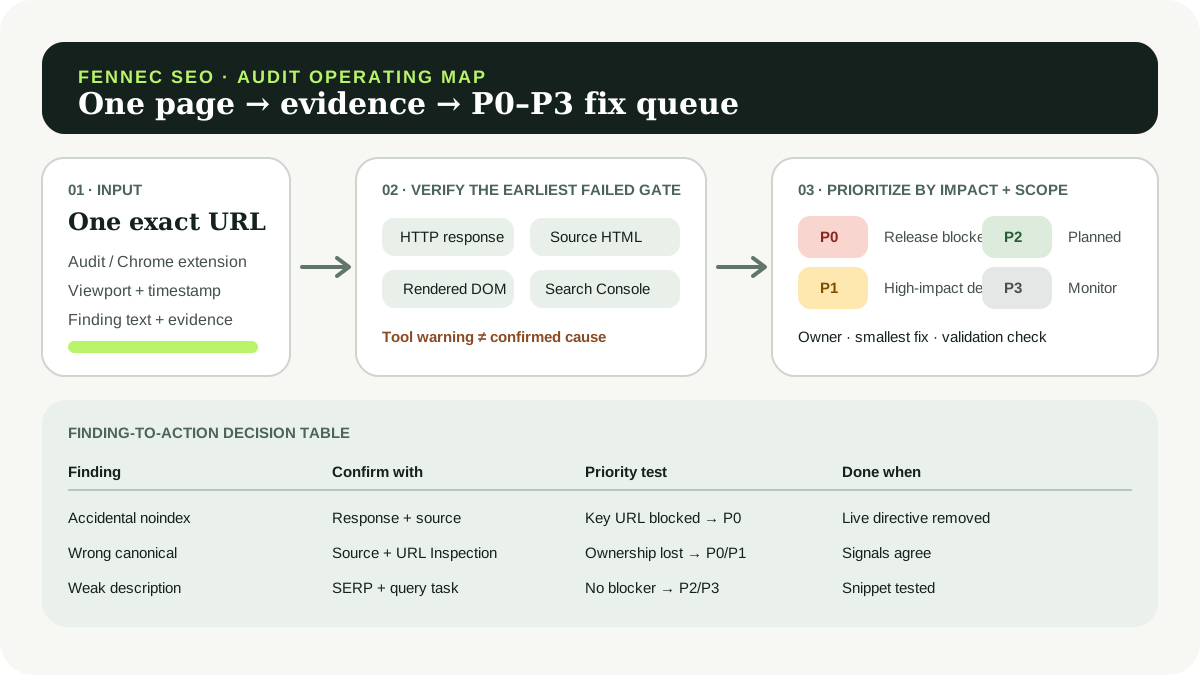
- Open the priority URL. Use Fennec or another page inspector to record the live output and the intended change.
- Sample the pattern. Check two or three equivalent pages. If the issue repeats, define the rule before launching a larger crawl.
- Crawl only for scope. Export the affected URLs, state the rule that selected them, and separate high-value pages from harmless exceptions.
- Add market evidence only when needed. Use Ahrefs, Semrush, or another approved source when the remaining question is demand, competitors, or links.
- Verify outcomes separately. In Search Console, compare the same page and date windows, then inspect the indexed version when indexing is the concern. Keep implementation evidence separate from performance evidence.
This sequence prevents a common failure: spending hours in a dashboard before confirming that the live page is correct. It also prevents the opposite mistake: treating a clean current page as evidence that a whole site or market problem does not exist.
A Realistic Example: A Page Has Impressions But Few Clicks
Suppose a product page has impressions but weak clicks. Do not jump straight to a competitor report.
First, check the live page: title, H1, primary answer, canonical, indexability clues, and internal links. Google recommends descriptive, concise titles and notes that snippets usually describe the linked page using its own visible content or meta description. Google Search Central: SEO Starter Guide
Then check Search Console by page and query. If the page is indexed and its snippet promise is accurate, research may be the next step. If the canonical is wrong, the visible answer is mismatched, or the same defect appears across templates, solve that implementation problem first. A backlink or rank-tracking dashboard cannot validate those release details for you.
Limits That Keep This Comparison Honest
- Fennec is not a substitute for a large URL crawl, a backlink index, or a competitor database.
- A crawler export is not proof that every row deserves the same fix or priority.
- An SEO suite’s score or visibility estimate is not a Google ranking signal.
- Search Console data and URL Inspection answer different questions: performance is aggregated over time, while URL Inspection shows Google’s indexed view rather than a live test.
- Mobile-first indexing does not make desktop crawlers obsolete. Google asks site owners to keep important content and metadata consistent for mobile users and Googlebot; choose the tool by the task, then validate the page experience. Google Search Central: mobile-first indexing best practices
Choose A Stack, Not A Winner
For most teams, the practical stack is:
- Fennec to establish current-page facts after a release or content change;
- a crawler to measure repeated technical patterns;
- an SEO suite to investigate external demand, links, and competitors; and
- Search Console to verify Google’s crawl, index, and search-performance evidence.
Start with Fennec SEO Extension for the current page, continue to the SEO Audit Tool for a browser-based check, and use the Google indexing troubleshooting guide when the question is specifically whether Google has processed the URL.
First-Party Sources
- Fennec SEO Extension
- Google Search Central: get started with Search Console
- Google Search Central: SEO Starter Guide
- Google Search Central: mobile-first indexing best practices
- Screaming Frog SEO Spider
- Ahrefs Site Audit
- Semrush Site Audit
Q&A
Is Fennec SEO a replacement for Screaming Frog, Ahrefs, or Semrush?
No. Fennec is a page-first audit workflow. Use a crawler for sitewide URL patterns, and use an SEO suite when the decision depends on external visibility, keywords, links, or competitors.
What should I use after a page release?
Check the live URL first. Confirm the title, visible content, canonical, links, images, robots signals, and structured data. Escalate to a crawl only when the same issue appears across a sample or template.
Can an audit score prove that a page will rank?
No. An audit can reveal implementation issues, but it cannot prove ranking, indexing, click-through rate, or business impact. Verify those separately in Search Console and analytics after enough time has passed.