Unlocking the Future of Search: Generative Engine Optimization (GEO) in the AI Era – Principles, Strategies, and Ties to Traditional SEO

In the rapidly evolving landscape of digital search, traditional methods are giving way to AI-driven paradigms. As users increasingly turn to conversational AI tools like ChatGPT, Google AI Overviews, Perplexity, and Claude for instant, synthesized answers, content creators must adapt. Enter Generative Engine Optimization (GEO), often dubbed AISEO, which represents the next frontier in visibility. This blog delves deep into GEO’s essence, its foundational principles tied to Retrieval-Augmented Generation (RAG), core optimization strategies, and its intricate relationship with classic Search Engine Optimization (SEO). By understanding these elements, you’ll be equipped to future-proof your content in an AI-dominated world.
The Essence and Principles of GEO: Beyond Traditional Visibility
At its core, GEO is the strategic process of structuring and enhancing digital content to maximize its chances of being retrieved, summarized, and cited in AI-generated responses. Unlike conventional search where results are ranked lists of links, generative engines synthesize information from multiple sources to deliver direct, human-like answers. The essence of GEO lies in making content “AI-ready” – not just discoverable, but extractable and referenceable by large language models (LLMs).
The principles of GEO stem from how AI processes information. It emphasizes semantic relevance over keyword stuffing, prioritizing content that demonstrates Expertise, Experience, Authoritativeness, and Trustworthiness (E-E-A-T). This means content must be contextually rich, factually accurate, and structured for easy parsing. GEO isn’t about gaming algorithms; it’s about aligning with AI’s goal of providing trustworthy, comprehensive responses. In practice, this involves semantic expansion – incorporating entities, long-tail queries, and related concepts to broaden AI recall – while ensuring multimodal elements like images and videos are optimized for RAG systems.
Fundamentally, GEO operates on the principle that visibility in AI search is about influence rather than ranking. Your content becomes part of the AI’s “reasoning” process, potentially cited without driving direct traffic, which shifts metrics from clicks to citations and brand mentions.
The Role of RAG in GEO: The Mechanistic Backbone
To grasp GEO’s principles, one must understand Retrieval-Augmented Generation (RAG), the technology powering most generative engines. RAG combines retrieval of relevant external data with generative capabilities of LLMs, ensuring responses are grounded in fresh, accurate information rather than solely on pre-trained knowledge.
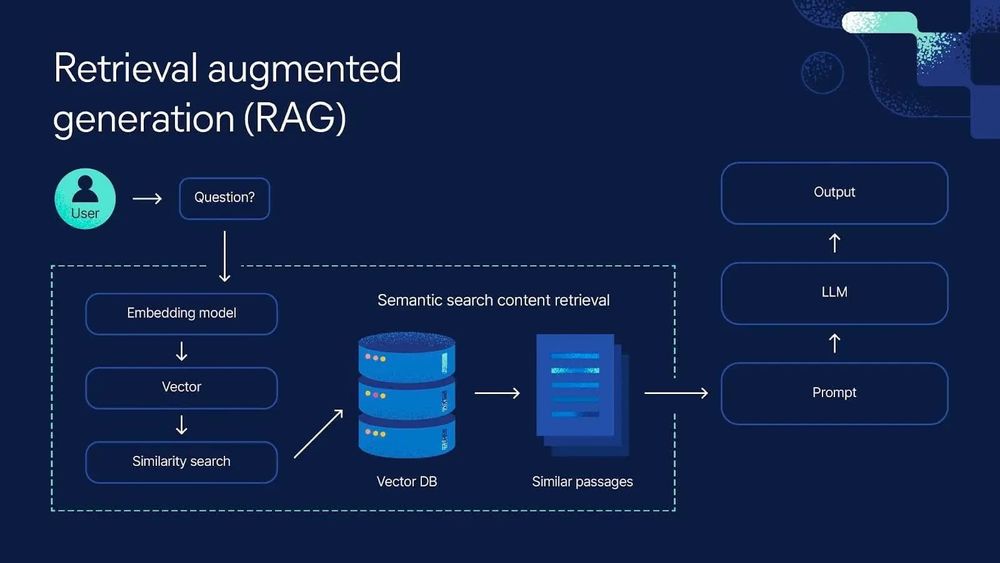
Here’s how RAG works: When a user queries an AI, the system first embeds the query into a vector space, searches a knowledge base (often web-indexed via semantic similarity), retrieves top-matching documents, and augments the LLM prompt with these snippets to generate a response. This hybrid approach mitigates hallucinations and boosts relevance.
In GEO, optimization targets the retrieval phase: Content must be semantically aligned, authoritative, and structured to score high in vector similarity searches. For instance, using clear headings, bullet points, and schema markup helps AI chunk and retrieve passages effectively.
Related Reading: Learn how AI bots like OpenClaw are automating data retrieval and SEO monitoring in the modern web ecosystem.
graph TD
    A[User Query] --> B[Embedding Model]
    B --> C[Vector Database]
    C -->|Retrieve Context| D[Relevant Documents]
    D --> E[LLM Prompt Augmentation]
    A --> E
    E --> F[LLM Generation]
    F --> G[Final Response]
This diagram illustrates the RAG flow, highlighting why GEO focuses on making content retrieval-friendly.
Core Strategies for GEO Optimization (AISEO): Practical Depth
AISEO, or GEO in action, involves targeted tactics to elevate content in generative responses. Here’s a breakdown of the core strategies, drawn from emerging best practices:
-
Establish Authority and E-E-A-T: AI favors content from verifiable experts. Include author bios, citations from reputable sources, and real-world examples. Avoid anonymous content; build topical authority through in-depth coverage.
-
Structure for Parseability: Use semantic HTML, descriptive headings (H2/H3), lists, tables, and FAQ sections. This makes content skimmable for both humans and AI, increasing the likelihood of direct quotes.
-
Optimize for Conversational Queries: Start with user prompts, not keywords. Research natural language questions (e.g., “What are the best free GEO tools?”) and answer them directly. Incorporate long-tail phrases and entities for semantic depth.
-
Citation and Source Optimization: Make content “citation-worthy” by including statistics, quotes, and references. Use a direct, conversational tone to mimic AI outputs.
-
Multimodal and Technical Enhancements: Integrate visuals with alt text, videos, and structured data (e.g., FAQ schema). Ensure clean code and fast loading for better indexing in RAG systems.
Pro Tip: Use Technical SEO Tools to ensure your site’s structure is optimized for both traditional crawlers and AI bots.
-
Iterate and Test: Use A/B testing for GEO elements, monitoring citations in tools like ChatGPT or Perplexity. Avoid pitfalls like over-optimization or vague content.
-
Long-Term Strategy: Regularly update content, build entity relationships (e.g., via Knowledge Graphs), and balance GEO with user value.
These strategies ensure your content isn’t just found but favored in AI synthesis.
GEO and SEO: Symbiosis in the AI Search Ecosystem
GEO isn’t SEO’s replacement; it’s its evolution. Both share foundations like high-quality content, relevance, and structure, but diverge in focus and mechanics.
| Aspect | SEO | GEO |
|---|---|---|
| Primary Goal | Rank high in SERPs to drive clicks and traffic | Be cited or synthesized in AI responses for influence and visibility |
| Target | Traditional search engines (e.g., Google) | AI generative engines (e.g., ChatGPT, Perplexity) |
| Optimization Focus | Keywords, backlinks, meta tags | Semantic depth, E-E-A-T, structured data for RAG retrieval |
| Metrics | Organic traffic, rankings, dwell time | Citations, brand mentions in AI outputs, synthesis accuracy |
| User Behavior | Clicks to pages | Direct answers without navigation |
| Similarities | Both emphasize authoritative, user-first content and technical cleanliness |
The key similarity? GEO builds on SEO: Well-optimized SEO content often performs in GEO due to shared E-E-A-T signals. However, GEO demands more: conversational alignment and AI-parseable formats. In AI search engines, SEO provides the crawlable base, while GEO ensures inclusion in generated narratives. Brands succeeding in both create “triple-threat” content that ranks, answers, and influences.
Conclusion: Embracing GEO for a Search-Defined Future
As AI search grows – with projections of the generative AI market reaching $356 billion by 2030 – GEO (AISEO) becomes essential for digital relevance. By mastering its essence (AI-ready content), principles (semantic and authoritative optimization), core strategies (structure and testing), and SEO ties (symbiotic evolution), you position your brand at the forefront. Start by auditing your content through an AI lens: Test queries in generative tools, refine for RAG compatibility, and iterate. The future of search isn’t about links; it’s about being the trusted voice in AI conversations.
Ready to future-proof your SEO strategy? Explore how Fennec SEO can help you adapt to the AI search era with advanced analytics and optimization tools.